FURUYA DENKI is an independent supplier and is not affiliated with or authorized by the brands shown on this page. Brand names, trademarks and part numbers are used for identification only. Availability, specifications, condition, origin, documentation, lead time and warranty are subject to our formal quotation. Please verify all technical requirements before ordering. Images are for reference only.
▣ Product Overview
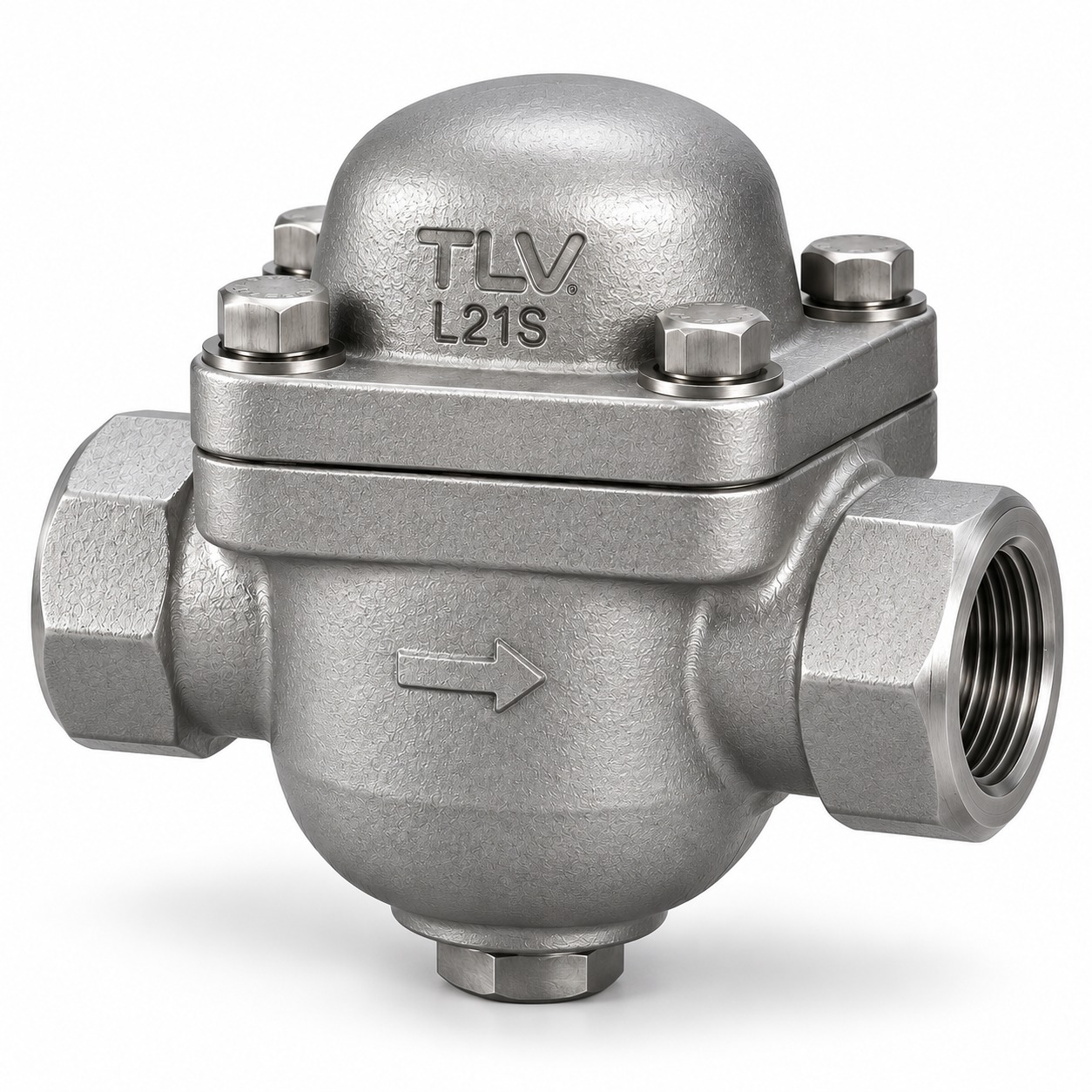
The TLV L21S Thermostatic Steam Trap is designed for reliable condensate removal in steam heating and industrial steam applications.
Using thermostatic control technology, the L21S automatically responds to temperature changes and discharges condensate efficiently while minimizing steam loss.
The compact carbon steel body design provides durability and stable performance, making it suitable for various steam equipment and heating applications.
The L21S offers excellent air discharge capability, helping improve system start-up performance and reduce problems caused by trapped air.
Key Features:
• Thermostatic steam trap design for efficient condensate removal
• Reliable air discharge performance
• Suitable for steam heating equipment and industrial applications
• Compact and durable construction
• Stable operation with reduced steam loss
• Easy installation and maintenance
⚙ Technical Specifications
Parameter Name
Parameter Value Unit
Product Type
Balanced Pressure Thermostatic Steam Trap -
Model
L21S -
Body Material
Forged Carbon Steel ASTM A105/A105M -
Connection
Screwed / Socket Welded / Flanged -
Nominal Size
DN15 / DN20 / DN25 -
Installation Orientation
Horizontal -
Maximum Operating Pressure
2.1 MPaG
Minimum Operating Pressure
0.01 MPaG
Maximum Back Pressure
90% of Inlet Pressure -
Maximum Operating Temperature
235 °C
X-element Type
C6 -
Subcooling
Up to 6 °C
Valve Seat Material
Hardened Stainless Steel -
Built-in Screen
Yes -
Maximum Discharge Capacity
Approx. 770 kg/h
Application
Steam Mains / Tracing / Dryers / Heaters -
اسم المعلمة
قيمة المعلمة الوحدة
نوع المنتج
مصيدة بخار حرارية بضغط متوازن -
الموديل
L21S -
مادة الهيكل
فولاذ كربوني مطروق ASTM A105/A105M -
نوع التوصيل
ملولب / لحام بالمقبس / ذو شفة -
المقاس الاسمي
DN15 / DN20 / DN25 -
اتجاه التركيب
أفقي -
أقصى ضغط تشغيل
2.1 MPaG
أدنى ضغط تشغيل
0.01 MPaG
أقصى ضغط خلفي
90% من ضغط الدخول -
أقصى درجة حرارة تشغيل
235 °C
نوع عنصر X
C6 -
درجة التبريد الفرعي
حتى 6 °C
مادة مقعد الصمام
فولاذ مقاوم للصدأ مقسى -
مصفاة مدمجة
نعم -
أقصى سعة تصريف
حوالي 770 kg/h
التطبيق
خطوط البخار / التتبع بالبخار / المجففات / السخانات -
▦ Typical Applications
Steam Heating Equipment
Industrial Steam Systems
Process Equipment and Condensate Drainage Applications
▰ Availability & Delivery
Availability & Delivery
Availability subject to quotation and stock confirmation
Lead Time
Availability and delivery time depend on model specification and order quantity. Please contact us for current stock status and delivery schedule.
Shipping Options
Air freight, sea freight, express
Packaging
Secure export packaging
? FAQ
What is the TLV L21S Thermostatic Steam Trap used for?
The TLV L21S is used to discharge condensate and air from steam systems. It is suitable for steam mains, tracing lines, dryers, heaters and light process equipment.
How does the TLV L21S thermostatic steam trap work?
The L21S uses an X-element that responds to temperature. It opens to discharge air and cooler condensate, then closes as the temperature approaches the saturation temperature of the steam.
What are the maximum operating pressure and temperature of the TLV L21S?
The standard TLV L21S has a maximum operating pressure of 2.1 MPaG and a maximum operating temperature of 235°C.
What are the main advantages of the TLV L21S?
The L21S provides excellent air venting, compact high-capacity performance, rugged construction, reliable condensate discharge and convenient cleaning and maintenance.
What should be confirmed before ordering the TLV L21S?
Please confirm the connection size, connection type, inlet and outlet pressure, operating temperature, condensate load, installation orientation and application conditions before ordering.